Building information modeling definition
Hem / Teknik & Digitalt / Building information modeling definition
Singapore's CORENET X requires BIM submissions for building approvals, using OpenBIM standards to automate code checking. See every asset, all in one place
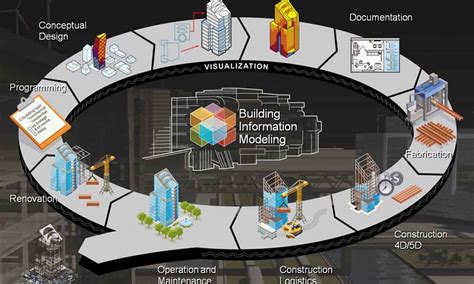
BIM gives you a complete digital view of every system, component, and piece of equipment in your facility. How does the HVAC duct connect to the air handler? Instead, LOD increases as the project progresses:
For Architects (LOD 100-300): Early design uses simple massing models (LOD 100-200) to study form and spatial relationships.
Use space and resources more efficiently
BIM’s built-in spatial intelligence helps facility teams understand how spaces are actually used.
Viewing a 5D BIM model within a common data environment to run a structure sequencing breakdown based on pour numbers.
Level 5 BIM adds cost estimations, budget analysis, and budget tracking to the information model.
Next came CAD (Computer Aided Design), which helped drafters see the benefit of plans in a digital environment. However, with global BIM mandates accelerating, this is changing—contractors who delay adoption risk being locked out of major projects.
This is where BIM service providers add value. Not every firm has the resources or expertise to implement BIM internally.
Early detection reduces costly on-site changes and ensures that operational systems are installed correctly from day one.
8. Unlike simple 3D modeling tools like SketchUp or Rhino—popular for conceptual design but limited to geometry—BIM contains embedded information essential to carry a project from design through construction to asset management.This embedded data is what distinguishes BIM from basic 3D models.
This helps teams anticipate service needs, schedule maintenance proactively, and extend asset life — reducing downtime and emergency repairs.
6. This catches accessibility, fire safety, and structural issues early, slashing approval times.Tender Preparation: The 3D model generates consistent 2D drawings (plans, sections, elevations) for contractor bidding, eliminating coordination errors in tender documents.
General contractors use BIM to catch problems before construction, optimize schedules, and control costs:
Clash Detection: Consolidating all subcontractor models (MEP, facades, steel) into a Common Data Environment reveals conflicts in the office, not on site.
While BIM offers clear advantages for coordination and clash detection, the 2D-to-BIM transition requires significant investment in software, training, and process change. The model exists in a ‘central’ environment and can be accessed and modified by everyone. This data allows governments, municipalities, and property managers to make informed decisions based on information derived from the model— even after the building is constructed.
From blueprints to CAD to BIM
In the past, blueprints and drawings were used to express information about a particular building plan.
Integration with CMMS and CAFM:
BIM becomes even more powerful when connected to operational systems like a Computerized Maintenance Management System (CMMS) or CAFM software.- The 3D model links directly to real-world asset records.
- Clicking on an asset reveals maintenance history or allows a new work order to be created instantly.
- Facility teams can visualize and manage maintenance in a 3D environment for faster, data-backed decisions.
5.
They bridge the gap by:
- Converting 2D drawings to BIM models
- Providing BIM coordination services for contractors who lack in-house capabilities
- Offering trained BIM personnel on a project basis
- Managing the CDE and coordination process
For firms not ready to fully commit to BIM internally, outsourcing to specialists provides BIM benefits without the overhead of permanent staff and software licenses.
Level of Development (LOD) defines how much detail a BIM model contains at each project stage.
Instead of each team member working in their own 3D model, Level 3 means that everyone uses a single, shared project model. It's a database of building information wrapped in a 3D interface, enabling better coordination, cost control, and project outcomes.
BIM catches clashes before construction (saving weeks and hundreds of thousands), enables 4D construction planning to optimize build sequences, provides 5D real-time cost tracking, ensures regulatory compliance with automated checking (Singapore's IFC+SG, CORENET X), and creates digital twin assets for facility management.
This integration helps every stakeholder, from developers to facility operators, turn design intelligence into ongoing operational performance.
Here’s how different groups benefit: